
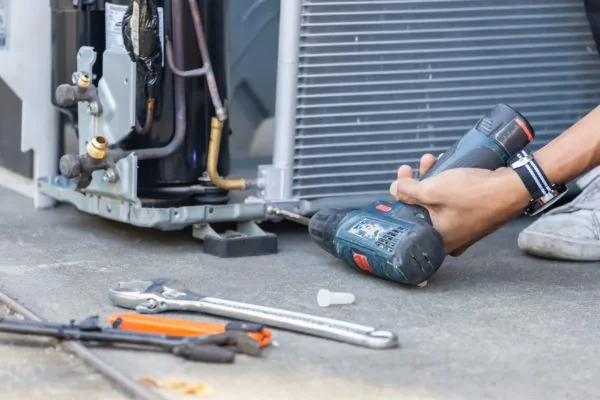
What the Condenser Actually Does
Air conditioning is heat moving, not cold being made. The indoor half of your system soaks heat out of the air in your rooms, and refrigerant carries that heat outside. The condenser handles the last step: it squeezes the heat out of the refrigerant and dumps it into the outdoor air, the same basic job a radiator does for a truck engine. Hold your hand over the top of a running unit on a July afternoon and you’ll feel it, a column of warm air that used to be the warmth inside your house.
What’s Inside the Cabinet
Three main players share that metal box:
- The compressor. The pump that drives refrigerant through the whole system and raises its pressure so it can shed heat outdoors. It’s the workhorse of the unit and its most expensive part.
- The condenser coil. The wall of thin metal fins wrapping the cabinet. Hot refrigerant flows through the coil’s tubing while outdoor air moves across the fins and strips the heat away.
- The fan. The big blade under the top grille. It pulls air in through the coil on all sides and pushes it out the top, which is why a running unit exhausts warm air upward.
There’s also a small electrical compartment holding the capacitor and contactor, minor parts that cause a very large share of no-cool calls.
Give It Room to Breathe
A condenser can only shed heat as fast as air can move through its coil. Grass clippings, leaves, cottonwood fluff, and plain dirt mat the fins and choke that airflow, and shrubs planted tight against the cabinet do the same thing from the outside. The unit keeps running, but longer, hotter, and less effectively. Keep a couple of feet clear on every side, aim the mower’s discharge away from the unit, and rinse the fins gently when they start looking furry.
Louisiana asks more of a condenser than most places do. Ours run from March into October, often through afternoons of direct sun, and closer to the coast the salt in the air slowly eats at coil fins. Down here, an annual coil cleaning isn’t cosmetic. It’s what keeps a long cooling season from aging the unit early.
Signs of Condenser Trouble
- It won’t turn on. Air moves inside the house but the outdoor cabinet sits silent. The cause is often electrical: a failed capacitor, a worn contactor, or a tripped breaker.
- Warm air from your vents. A condenser that can’t release heat outdoors leaves the system unable to absorb more of it indoors, so the air at the registers goes lukewarm.
- Loud operation. Rattling, grinding, or screeching from the cabinet means a motor, a fan blade, or the compressor is asking for help soon, not eventually.
DIY or Call a Pro?
Clearing debris, trimming plants back, and rinsing the fins are homeowner jobs, and they make a real difference. Anything behind the service panel isn’t. The cabinet holds high-voltage components and a capacitor that keeps its charge with the power off, and refrigerant work requires a license besides.
When the outdoor unit goes silent, starts screaming, or runs hard while the house stays warm, that’s our department: schedule a repair or call (337) 893-5646. And if it’s working fine but hasn’t been cleaned in a year or more, an annual tune-up is the easiest way to keep it that way.